









The open data
lakehouse for agents

Serve enterprise data to agents securely and at scale on object storage.

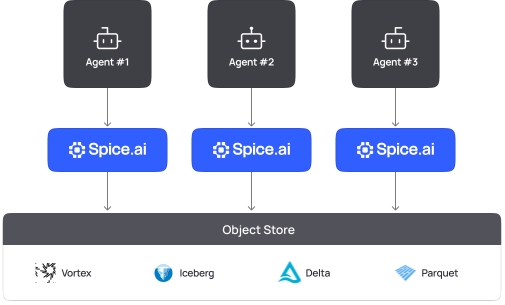
Diagram of three AI agents, each connected through its own Spice.ai instance to a shared object store that holds Vortex, Iceberg, Delta, and Parquet data

Use cases

Spice serves demanding data and AI workloads that need low latency and reliability, and keeps them simple to operate from one deployment to thousands.

Enterprise agents need real-time data across sources, but pointing them at production services increases the blast radius of every agent. Spice gives each agent a sandboxed, accelerated copy of the data it needs with search and tools built in.

Multi-tenant platforms that ship agents to customers need a slightly different setup for every tenant, each with its own data, sources, and rules. Spice standardizes lakehouse deployments for every tenant, so adding a customer is a configuration change instead of new data infrastructure.

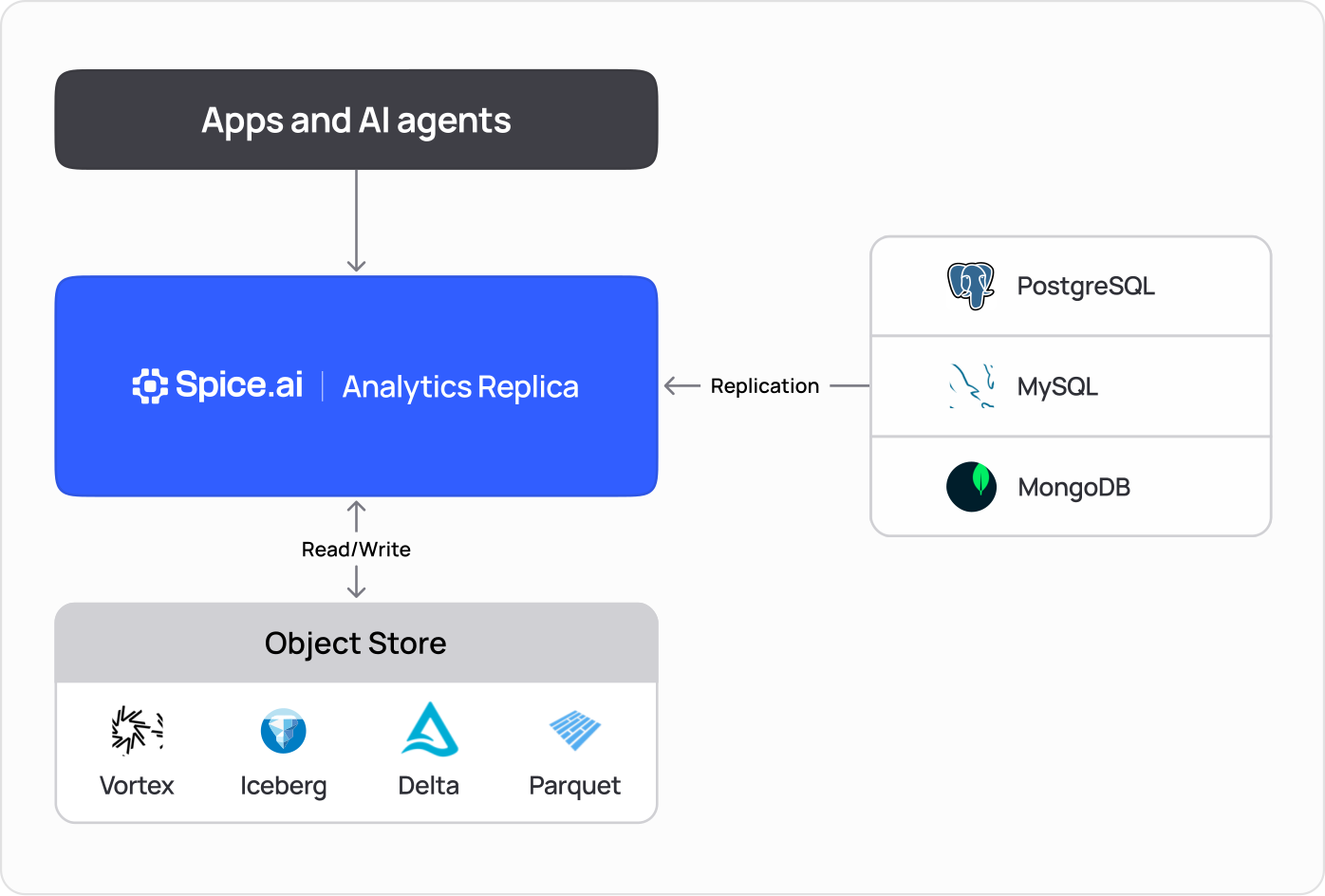
Spice replicates changes from operational databases to an isolated analytics replica via high-throughput CDC, so agents can run large analytical queries against near real-time operational data without impacting production.

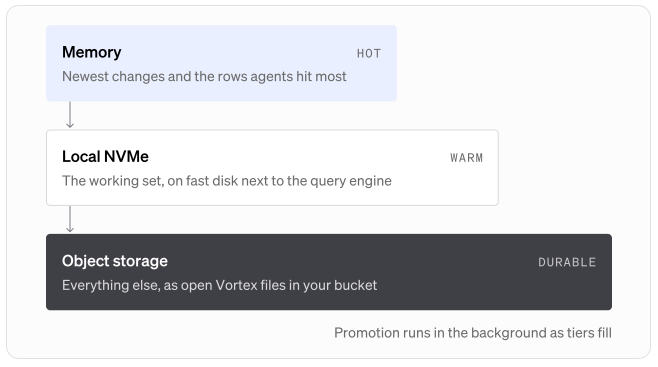
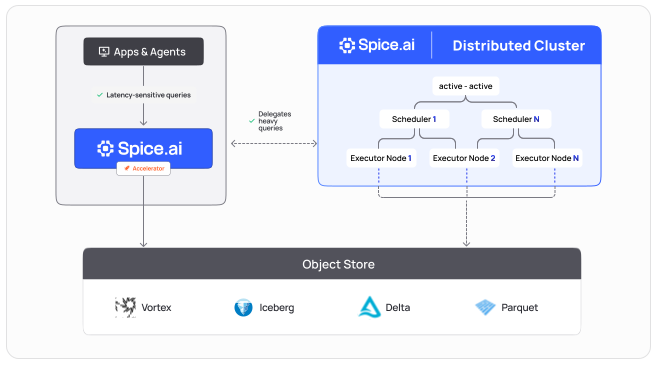
Spice accelerates the hot-path in memory and on local NVMe, while the source of truth stays in open formats on object storage. Deploy Spice as a sidecar next to the agent for low-latency reads, as a microservice, or as a distributed cluster.

For many workloads, every new dashboard or source requires another ETL pipeline to build and maintain, and latency is determined by when the last run took place. Spice queries each source in place with federated SQL, so results reflect the current state of the source.

Introducing a retrieval pipeline usually requires standing up a separate search engine alongside the rest of your data infrastructure. Spice runs vector and full-text search in the same SQL query as joins and filters.

Powered by

Proven in production

From messaging platforms to security systems, companies like Twilio and Barracuda rely on Spice to deliver low-latency apps & AI agents at scale.

Peter Janovsky

“Spice opened the door to take these critical control-plane datasets and move them next to our services in the runtime path.”

Peter Janovsky

Software Architect, Twilio

Darin Douglass

100x

Faster queries

“It just spins up and works, which is really nice. The responsiveness is amazing, which is a huge gain for the customer.”

Tim Ottersburg

“Partnering with Spice AI has transformed how NRC Health delivers AI-driven insights. By unifying siloed data across systems, we accelerated AI feature development, reducing time-to-market from months to weeks - and sometimes days. With predictable costs and faster innovation, Spice isn't just solving some of our data and AI challenges - it's helping us redefine personalized healthcare.”

Tim Ottersburg

VP of Technology, NRC Health

Ramachandra Ramarathinam

“Spice is the data plane behind Summation. Every connector we ship, from Snowflake to a generic REST-as-a-table, collapses into one SQL surface, which is what makes our AI agents portable across a customer's stack.”

Ramachandra Ramarathinam

CTO, Summation

Rachel Wong

“Spice AI grounds AI in our actual data, using SQL queries across many data sources. This brings accuracy to probabilistic AI systems, which are very prone to hallucinations.”

Rachel Wong

CTO, Basis Set

Fast, physically isolated access to enterprise data

A single SQL endpoint for retrieving, accelerating, searching, and reasoning over operational and analytical data. Incrementally adoptable and built on object storage.

SQL Federation & Acceleration

Fast and federated access to all of your data

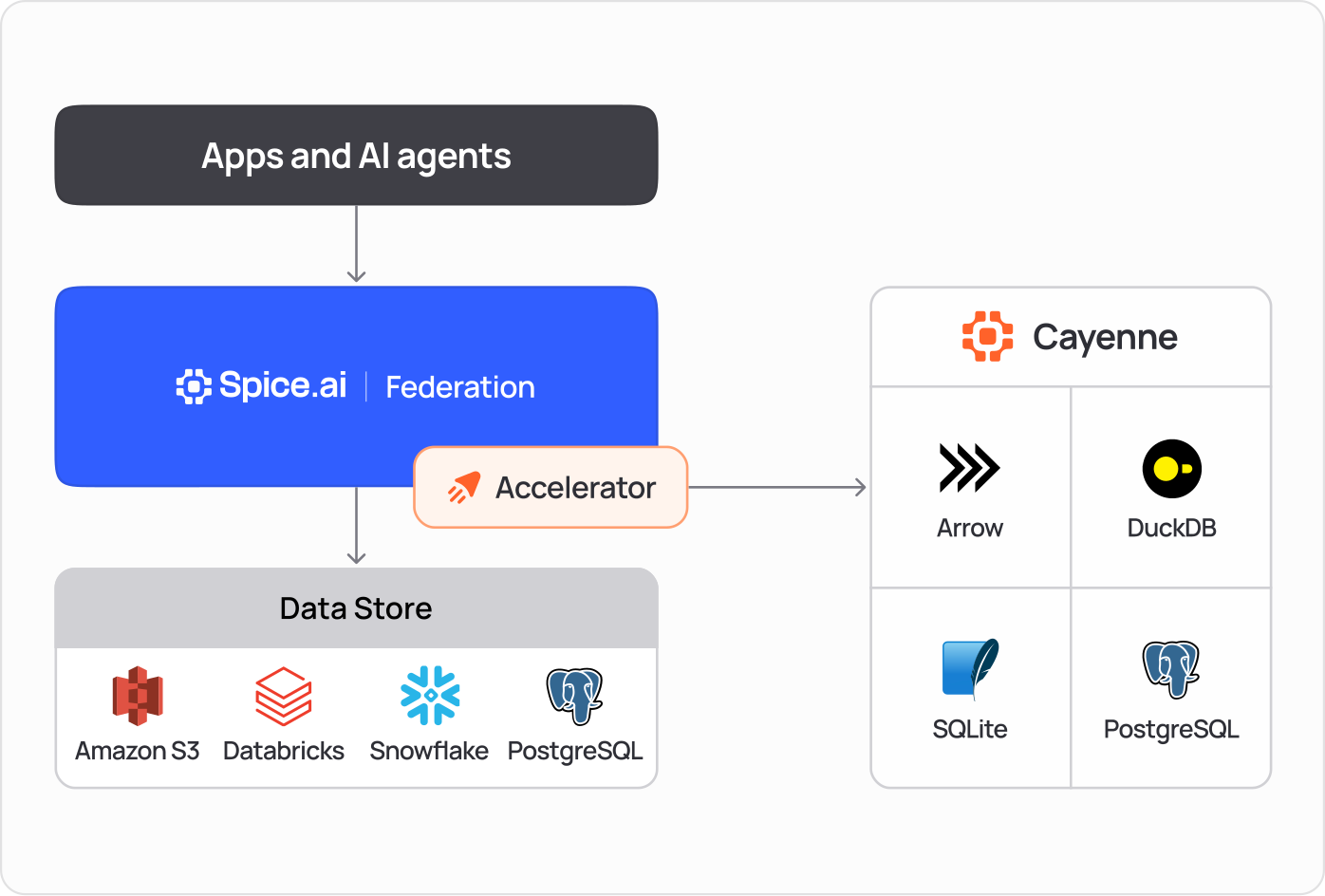
Connect to and query operational databases, data lakes, and warehouses across the enterprise. Materialize and accelerate working sets in-memory or on disk for millisecond access.

SQL federation and acceleration

Spice AI SQL federation and data acceleration architecture
Analytical Query on Operational Data

Real-time analytics without impacting production

Deploy an analytics replica in minutes for fast, isolated queries on real-time operational data.

Analytics on operational data

Spice AI analytics replica architecture overview
Hybrid Search

Combine keyword, vector, and full-text search in SQL

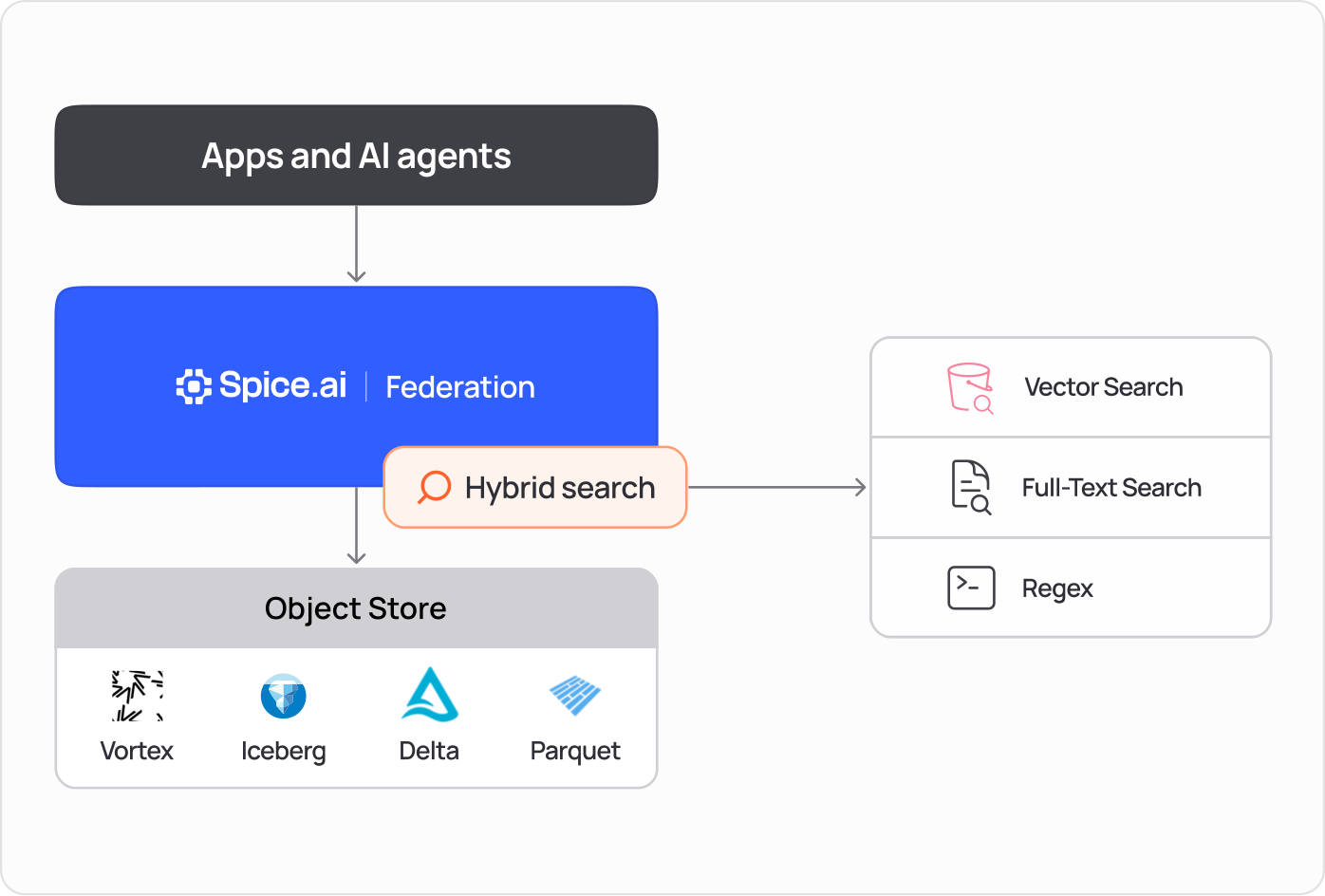
Run hybrid search with standard SQL. Spice combines structured filters, vector similarity, and keyword matches in one query, then ranks the merged results by relevance for search-driven apps.

Hybrid SQL search

Spice AI hybrid SQL search combining keyword, vector, and full-text search
Embedded AI Inference

Call LLMs directly from the query layer

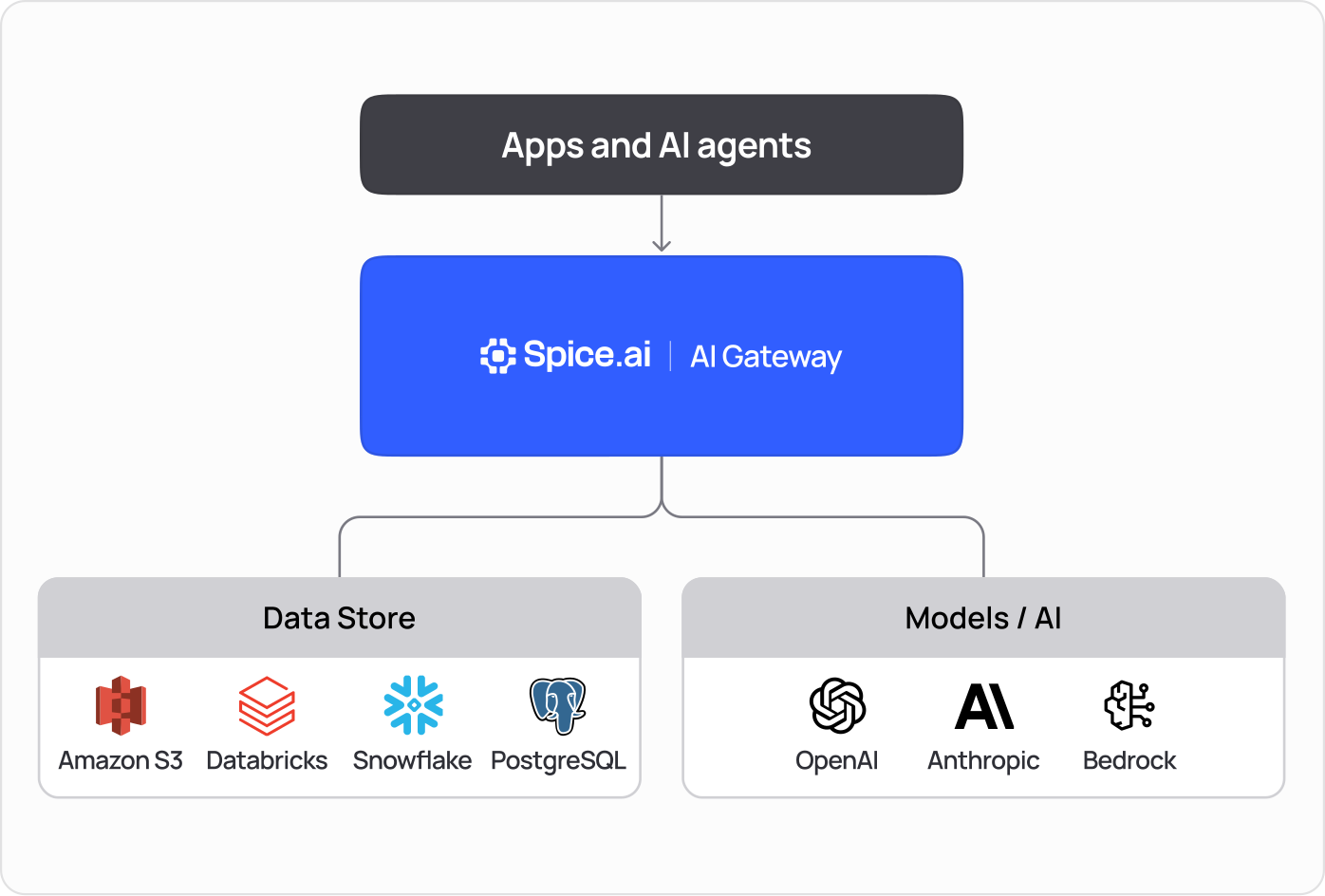
Call hosted or local LLMs inline using SQL UDFs or natural language. Translate text, generate summaries, classify entities, and augment query results on your enterprise data without leaving the Spice runtime.

LLM inference in Spice

Spice AI embedded AI inference with LLM calls from SQL

Make your data AI-ready

Sub-second query performance across sources, up to 80% lower lakehouse spend, and increased data resiliency.

Lower is better

100x

up to 100x faster queries

Lower is better

80%

up to 80% lower data lakehouse spend

Higher is better

2x

2x increase in data reliability for critical workloads

An accelerated lakehouse for every customer, team, and agent

Join Parquet in S3 with a PostgreSQL table in one federated query.

# spicepod.yamldatasets:  - from: s3://spiceai-demo-datasets/taxi_trips/2024/    name: taxi_trips    params: { file_format: parquet, s3_auth: public }  - from: postgres:taxi_zones    name: taxi_zones    params:      pg_host: localhost      pg_port: 15432      pg_db: taxi      pg_user: postgres      pg_pass: ${secrets:SPICE_PG_PASS}      pg_sslmode: disablesql> SELECT z.zone, COUNT(*) AS trips     FROM taxi_trips t                 -- S3     JOIN taxi_zones z                 -- PostgreSQL       ON t."PULocationID" = z.location_id     GROUP BY z.zone ORDER BY trips DESC LIMIT 3;JFK Airport                 145240Midtown Center              143471Upper East Side South       142708Time: 2.705 seconds

One spicepod.yaml file defines the lakehouse: SQL federation across your data sources, plus acceleration, search, and inference. The Spice Cloud API deploys it for each customer, internal team, or agent.

Every deployment runs the same standard lakehouse, so operating hundreds stays simple. Each can still use its own data sources and settings. A SaaS company can give each customer its own lakehouse; an enterprise data platform team can do the same for each internal team.

A coding agent can write and run the spicepod for you in minutes.

  1. /plugin marketplace add spiceai/skills
  2. /plugin install spiceai@spiceai

Control and optionality at every layer

Run real-time apps and AI agents on existing data, with control over where Spice runs, what each agent can read, and how every request performs.

Edge-to-cloud

Run Spice.ai Open Source locally, at the edge, or on the fully managed Spice.ai Cloud Platform. Lightweight, portable, and designed for scale.

Deploy anywhere

AI sandboxing
& security

Provision isolated, least-privilege datasets for apps and agents with zero direct database access. Keep governance intact while enabling RAG, agents, and AI workflows.

Secure AI sandboxing

Distributed
observability

Perform end-to-end tracing across SQL, embeddings, search, and LLM calls. Debug, measure latency, and prove ROI from a single view.

Observability docs (opens in a new tab)

Watch Spice in action

Demos from the founders and engineers who built it.

FAQs

Common questions about what Spice AI is, how it works, and how teams run it.

Spice AI builds Spice, an open-source engine for SQL query, search, and LLM inference over enterprise data. Applications and AI agents use one SQL endpoint to query databases, data lakes, and warehouses. Spice can also keep an analytics replica of an operational database, so analytical reads do not load production. Teams run Spice on their own infrastructure or use the managed Spice Cloud Platform.

Spice is written in Rust and uses Apache DataFusion as its SQL query engine. Data moves through the runtime in the Apache Arrow columnar format. Apache Ballista runs distributed queries across a cluster. The Spice Cayenne accelerator stores local copies in the Vortex columnar format.

No. Spice runs next to existing databases, data lakes, and warehouses, and those systems stay the source of truth. Applications keep writing to the operational database. Spice serves reads through SQL federation and acceleration, from the source or from a local accelerated copy. Teams can add Spice one dataset at a time, without a data migration.

AI agents query Spice through three interfaces: a SQL API, an OpenAI-compatible chat API, and an MCP server. The SQL API runs queries that the agent writes. The chat API lets a model call built-in SQL and search tools. The MCP server connects agent frameworks that use the Model Context Protocol.

Spice runs on a laptop, on-premises, at the edge, or in any cloud. Teams deploy it as a sidecar next to an application, as a shared microservice, or as a distributed cluster on Kubernetes. The Spice Cloud Platform runs Spice as a managed service. See edge-to-cloud deployments for each option.

Yes. Spice.ai Open Source is free under the Apache 2.0 license, with community support on GitHub and Slack. Spice Cloud adds a managed service with subscription and usage-based plans. Enterprise plans add commercial licensing, 24/7 support, and SLAs. See pricing to compare the plans.

Twilio, Barracuda Networks, NRC Health, Basis Set, and Summation run Spice in production. The Spice 1.0 announcement from January 2025 reports P99 query times under 5 milliseconds for the Twilio messaging control plane. The Barracuda case study, published in June 2026, reports data lake query responses up to 100x faster.

See Spice in action

Walk through your use case with an engineer and see how Spice handles federation, acceleration, and AI integration for production workloads.

Talk to an engineer (opens in a new tab)