Real-time analytics on operational data, without ETL
Add a sandboxed, analytics-ready replica alongside PostgreSQL, MySQL, and MongoDB in minutes. Spice keeps it fresh with high-throughput change data capture for sub-second queries, no ETL, and no analytical load on your production database.
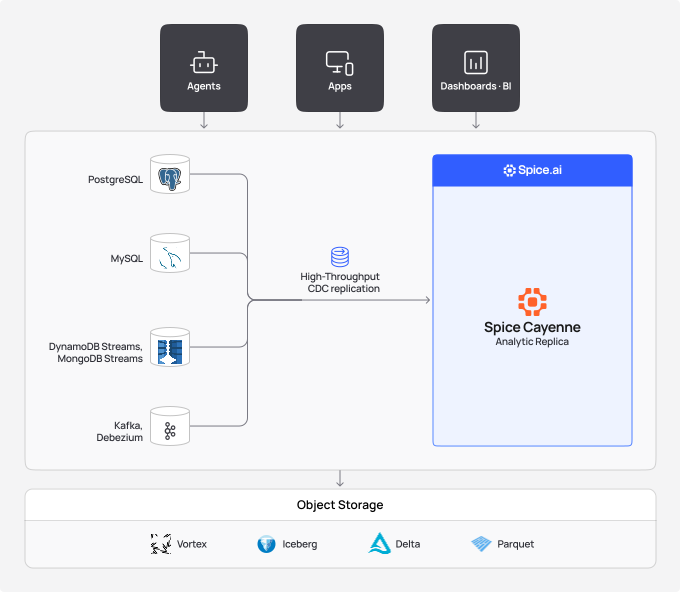
Real-time analytics, zero production impact
0
analytical queries run on your production database, ever
2.0s
end-to-end freshness under load, from source commit to query-ready
1.5x
faster than DuckDB with 3x less memory on Spice Cayenne
Operational databases weren't built for analytics
Running analytical queries directly on MySQL, PostgreSQL, or MongoDB puts mission-critical operations at risk: heavy queries contend with production traffic, row-level security policies grow brittle, and data can leak beyond its intended audience. The usual workaround, ETL pipelines that copy data into a separate analytical system, is expensive to build, costly to operate, and never real-time, with data arriving hours or days stale.

Add analytics to your operational data, without ETL
Point Spice at a live operational database and it maintains a continuously updated analytics replica. Start with one table, then compose and join across replicated sources in a single SQL query.
Zero load on production
Spice replicates from the native change log, so analytical queries and AI agents run against the sandboxed replica. Your operational database never executes a single analytical query.
Explore CDC replication (opens in a new tab)
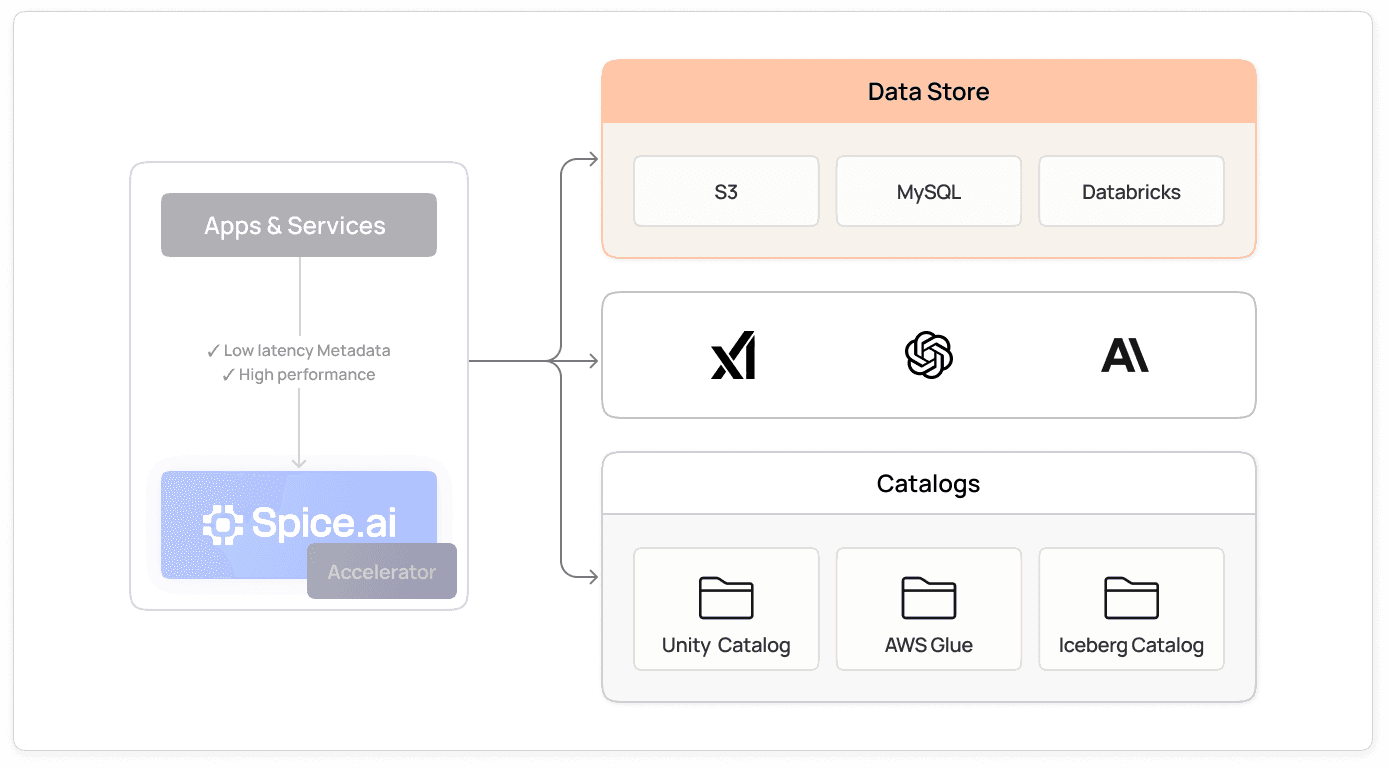
Real-time freshness, no pipelines
Native replication from the PostgreSQL WAL, MySQL binlog, and MongoDB oplog delivers single-digit-second freshness. No Debezium or external streaming layer required.
See real-time CDC
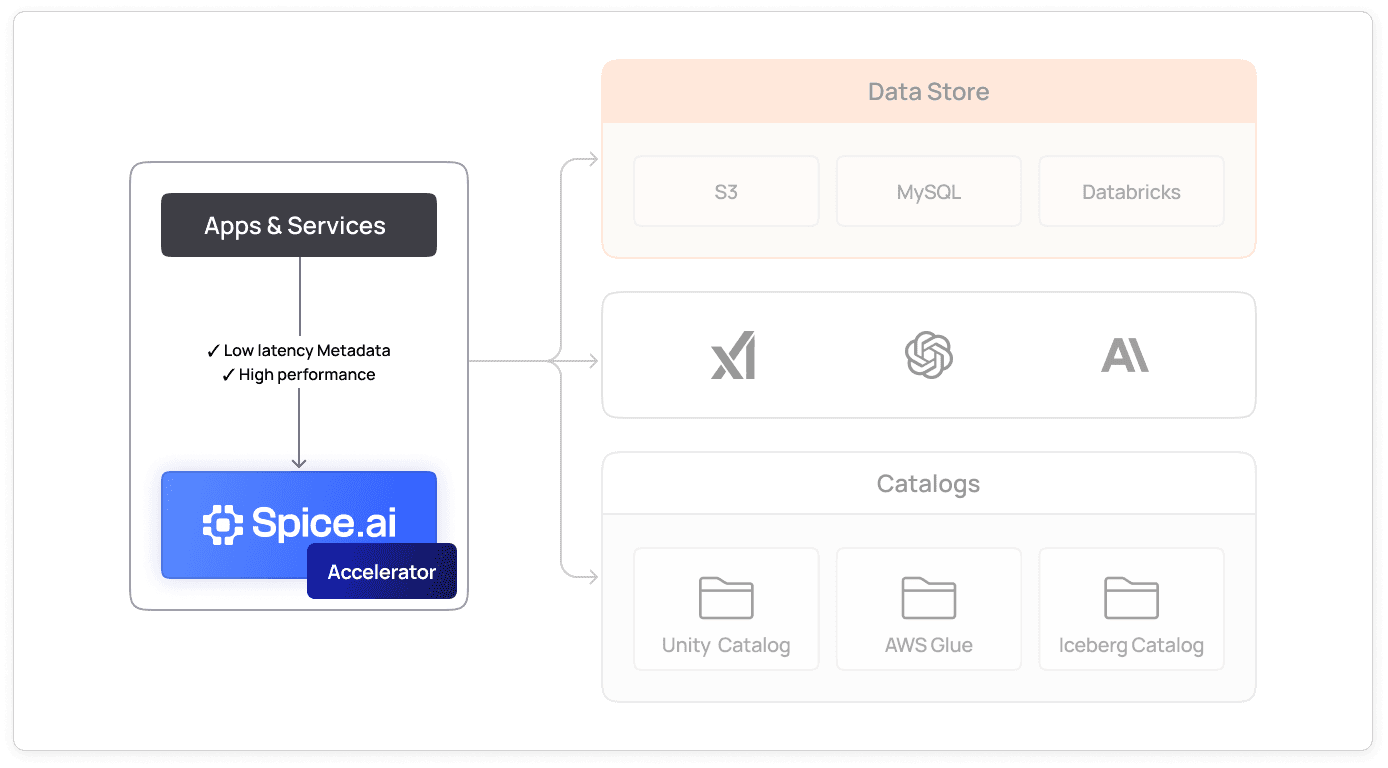
Sub-second query performance
Spice materializes the replica with the Spice Cayenne accelerator, built on the Vortex columnar format: 1.5x faster than DuckDB with 3x less memory. DuckDB and SQLite acceleration engines are also supported.
Explore Spice Cayenne
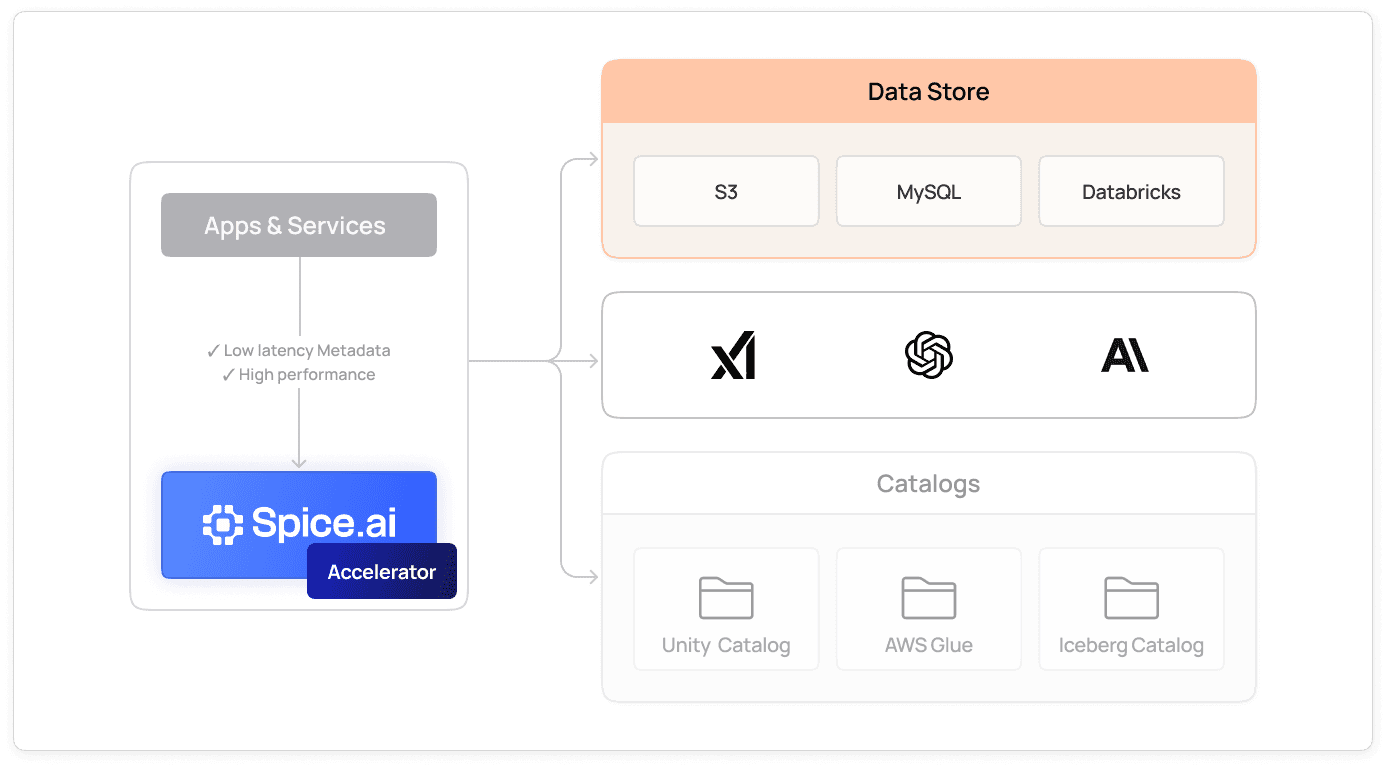
Connect the tools you already use
Query the replica from Microsoft Power BI, Tableau, Looker, and Apache Superset over Arrow Flight SQL, ODBC, and JDBC, or build in code with the SpicePy Python library and the Go, Rust, Java, and JavaScript SDKs.
Read the Power BI guide

Why teams run analytics on Spice
Spice adds an analytics replica to your operational data with the freshness, scale, and controls that production analytics and AI agents demand.

Native CDC replication
Replicate directly from the PostgreSQL WAL, MySQL binlog, and MongoDB oplog, with automatic slot management and bootstrapped snapshots. No Debezium required.

One SQL surface
Federate and join replicated datasets with object storage, warehouses, and APIs in a single query using standard SQL.

Sub-second acceleration
Materialize hot working sets locally with Spice Cayenne, built on the Vortex columnar format, for millisecond query performance.

Petabyte-scale distributed query
Scale beyond one node with multi-node distributed compute built on Apache Ballista, object-store native and highly available.

Sandboxed and governed
Each replica is a physically isolated sandbox. Row- and column-level policy, PII masking, mTLS, and OIDC authentication are enforced inside the query engine.

Built on open standards
Arrow, Iceberg, Delta, Parquet, and Vortex, served over Arrow Flight SQL, ODBC, and JDBC. Open source and portable, with no lock-in.
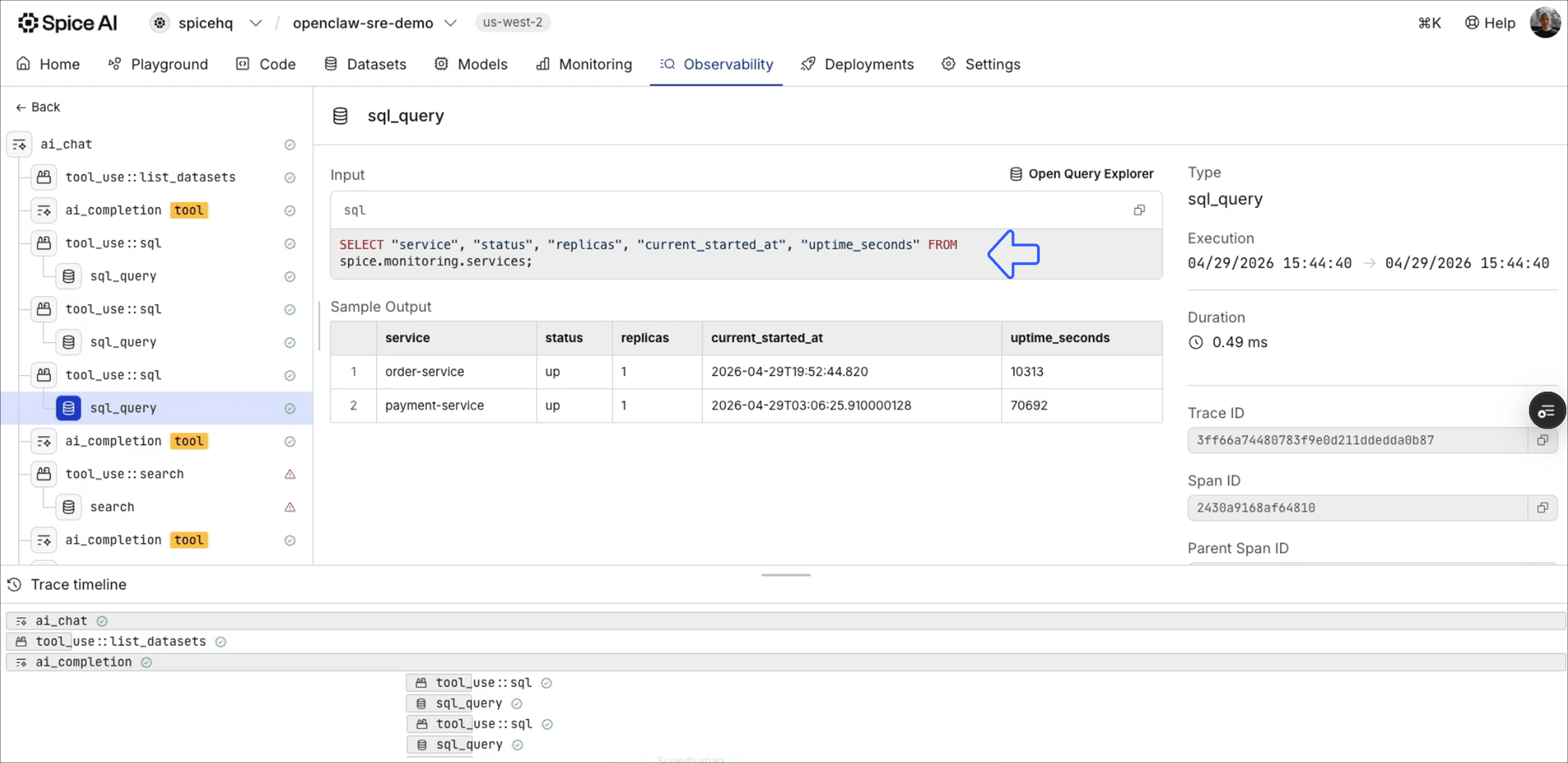
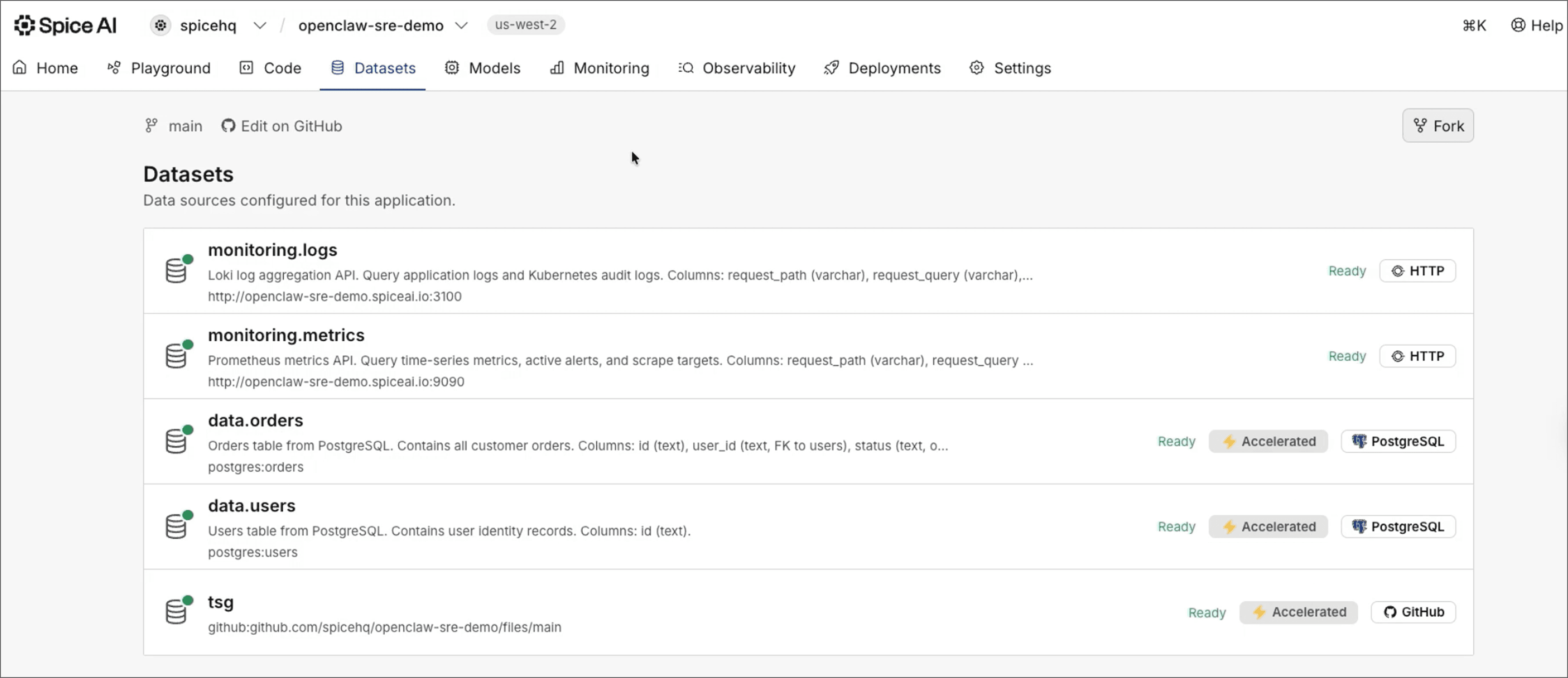
Query operational data with SQL in the Spice portal
Explore datasets, run SQL, and inspect results in the Spice Cloud portal. Built-in observability traces every query with execution timing and lineage, so you can validate freshness and tune performance against the replica instead of production.
Proven in production
Teams building real-time systems at scale run Spice to serve analytics and AI from operational data.

100x
Faster queries
“It just spins up and works, which is really nice. The responsiveness is amazing, which is a huge gain for the customer.”
Darin Douglass
Principal Software Engineer, Barracuda
Learn how Barracuda gained 100x faster query responses and reduced costs 50% with Spice

“Spice opened the door to take these critical control-plane datasets and move them next to our services in the runtime path.”
Peter Janovsky
Software Architect, Twilio
FAQs
Common questions from teams adding real-time analytics to an operational database.
Add an analytics replica when dashboards, in-app reporting, or AI agents need fresh answers on operational data without a pipeline project. A warehouse fits scheduled, organization-wide BI over historical data. The replica is query-ready within seconds of a source commit, while ETL into a warehouse lands data hours or days later.
Yes. Spice replicates from the native change log, the PostgreSQL WAL, MySQL binlog, or MongoDB oplog, into a sandboxed replica, and dashboards query the replica. In benchmarks the operational database sustained its full transactional workload while Spice served all analytics, and production never executed a single analytical query.
Yes, each source replicates into the same Spice runtime. One SQL query can then join tables replicated from PostgreSQL, MySQL, MongoDB, and DynamoDB, plus event streams from systems like Kafka. Start with one table, then compose across sources as you go. See the CDC documentation for supported sources.
Single-digit seconds under load: roughly 2.0 seconds end-to-end for CDC covering inserts, updates, and deletes, measured from source commit to exactly-correct results on the replica. Dashboards and agents stay current without scheduled batch loads.
You can retire them for the workloads the replica serves. Replication is built into the runtime, so there are no external ETL jobs, no Debezium to operate, and no streaming layer to manage. Adoption is incremental: move one table or dashboard at a time while existing pipelines keep running.
Any tool that speaks Arrow Flight SQL, ODBC, or JDBC can query the replica. Tableau, Looker, and Apache Superset connect through standard drivers, and Microsoft Power BI uses the native Spice connector, a one-time install. The queries themselves stay SQL, so dashboard logic carries over unchanged. Application code can use the SpicePy Python library or the Go, Rust, Java, and JavaScript SDKs.
Spice adds multi-node distributed compute built on Apache Ballista for petabyte-scale query. Distribution composes with local acceleration: use acceleration for working sets that fit on one node, and distribution for data that does not.
Both work. The Spice runtime is open source under the Apache 2.0 license and includes CDC replication and acceleration, so you can self-host the full analytics replica. Spice Cloud offers it fully managed, and Spice.ai Enterprise adds self-hosted deployment with SSO, RBAC, and audit logs.
Learn more about analytics on Spice
Guides, benchmarks, and references for adding a real-time analytics replica to your operational data.
Spice 2.0: Real-Time Analytical Query on Operational Data, Without ETL
Add real-time analytical query and search to operational data without ETL via high-throughput CDC replication, petabyte-scale distributed compute built on Apache Ballista, and enterprise-grade controls.
Analytics Replica
See how Spice adds a sandboxed analytics replica to PostgreSQL, MySQL, and MongoDB with real-time CDC replication.
Change Data Capture (CDC) Replication
Configure native replication from the PostgreSQL WAL, MySQL binlog, and MongoDB oplog, plus event-stream ingestion from Kafka.

See Spice in action
Walk through your use case with an engineer and see how Spice handles federation, acceleration, and AI integration for production workloads.
Talk to an engineer (opens in a new tab)